

Article published in the 2022 Annual Report
Before the anniversary of its constitutive assembly, the Association of Community Aqueducts of Puerto Rico Inc. (AACPR) had already achieved two of its main goals: to attract the leadership of dozens of community aqueducts to promote an organizational structure that would represent them; and the recognition by local and federal government institutions of an organization that brings together and represents the interests of the community.
In Puerto Rico there are about 242 community aqueducts, located in 43 municipalities, which supply water to 3% of the population (120,000). Of these, the Association has already attracted 84 community aqueducts, thanks to a recruitment process that continues to add aqueducts.
“The community aqueducts are more open to sharing their challenges and problems with the association, composed of people who are community leaders and administer aqueducts,” says José Ríos, president of the association and treasurer of the Pedro Calixto Rural Aqueduct Inc. in Caguas. “Carrying the message with a single voice also allows community aqueducts to emerge from invisibility and makes the Association a solid organization,” he adds.
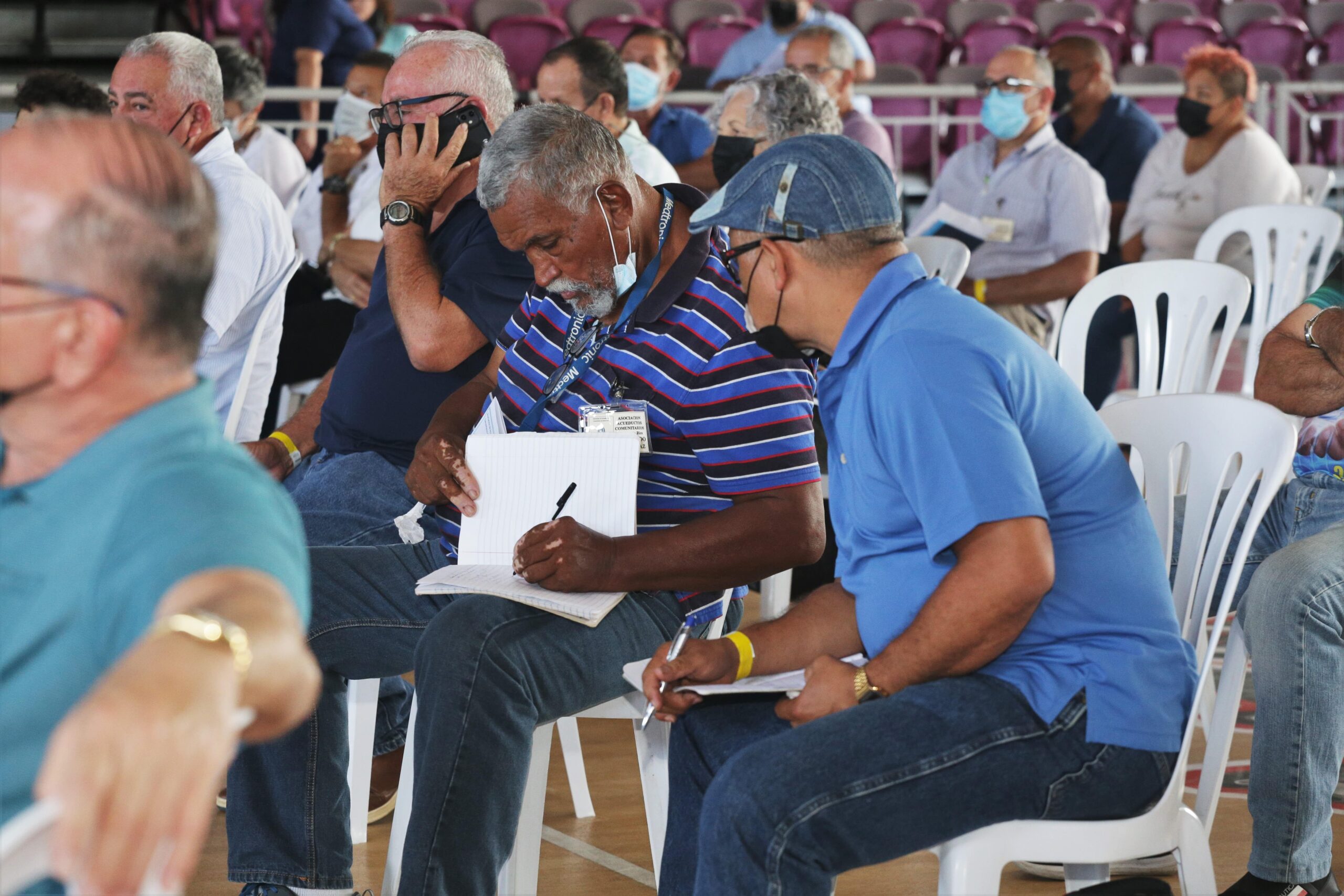
Communities from four regions of the island gathered on May 14, 2022 to formalize the Association during its constitutive assembly, held at the Salvador Dijols Coliseum in Ponce, where its first board of directors was elected. The new organization was created to represent the interests of the communities that manage community drinking water systems in Puerto Rico, located mostly in rural and mountainous areas.
The establishment of the Association is the result of a series of meetings in which more than 60 community aqueducts have participated since 2019, facilitated and supported by the Puerto Rico Community Foundation (PRCF), thanks to the financial support of GlobalGiving. The boards of directors of these aqueducts are in charge of the management, administration and management of these drinking water systems.
From assembly to action, the first steps
The organization became active in the same year of its establishment so that the Department of Natural and Environmental Resources (DNER) would extend an amnesty decreed to take advantage of the water sources that supply the community aqueducts. During this period, they also raised their voice through a presentation to make visible the feelings of the aqueducts regarding the appointment of the designated Secretary of the Department of Natural and Environmental Resources (DNER).
DRNA, Anais Rodríguez Vega.
On the other hand, one of the main benefits that AACPR provides to its member-members is to facilitate access to quality suppliers, which is why they undertook the task of developing a robust database for their enrollment. They were also trained in the National Rural Water Association (NRWA) program.
Photo: Edwin Ramos