

Businesses and non-profit organizations may apply to participate.
PDF version in the press release
A strategic and multisectoral alliance between Global Energy Alliance for People and the Planet (GEAPP), Fundación Comunitaria de Puerto Rico (FCPR) and Banco Popular de Puerto Rico (BPPR) will expand a novel and proven hybrid financing model known as CERI for approximately 75 critical facilities in Puerto Rico -businesses or non-profit organizations- to become energy resilient through access to renewable energy.
The Community Energy Resilience Initiative (CERI, The program provides businesses and non-profit organizations considered critical facilities with access to financial capital so they can acquire a solar energy and storage system that maintains the continuity of their essential services during and after an emergency. This is made possible through a hybrid financing model that consists of a grant and loan for businesses and a grant, grant and loan for non-profit organizations.
If you are interested in participating, please write to accesoaenergia@fcpr.org or call 787.721.1037. The evaluation process will begin on October 1.
CERI is promoted by GEAPP and managed in Puerto Rico by the FCPR, and its goal is to impact 75 critical facilities in two years.
“This initiative that we have been supporting is an excellent example of collaboration between institutions committed to increasing energy resilience in Puerto Rico. The innovative definition of critical facilities, as well as the hybrid financing are going to be success factors that I hope will contribute to expand the program in Puerto Rico but also serve as a model for other countries,” he said. Isabelle Beltrán, general manager for Latin America and the Caribbean.
Critical facilities, whether for-profit or not-for-profit, are those that provide essential services to the community and in times of emergency provide continuity of services vital to the survival of the community. The services they provide fall into these categories: social, communication, food, infrastructure, health and transportation - government-owned facilities are outside the scope of this initiative.
“Hybrid financing makes it possible for these entities to gain access to these systems, as it lowers the cost they would have to pay if they didn't have these subsidies - and donation in the case of nonprofits,» said Mary Ann Gabino, FCPR vice president. “This strategic alliance demonstrates the potential of pooling resources. It also demonstrates the importance of generating creative, multi-sector solutions to social problems. We are very excited and grateful for this opportunity that not only does justice to our communities, but also shows other ways in which the Third Sector can access funds,” added Gabino.
While the president and chief executive officer of the FCPR, Dr. Nelson I. Colón Tarrats, mentioned the importance of community participation in making communities resilient. “We have seen how the community has been present to address emergency issues. We saw it during and after hurricanes Irma and Maria, then in the earthquakes and in COVID. We have a stronger community and social fiber since these events,” said Colón Tarrats.
Funding will be provided through BPPR, the grant will be provided through an investment from GEAPP, and donations to the nonprofits will come from BPPR and Mellon Foundation. In the case of businesses, the subsidy will be up to 20%. In the case of non-profit organizations, the grant will also be up to 20% and the donation up to 40%. The CERI process includes four stages beginning with a call or referral and culminating with installation.
“At Popular, we are committed to the progress of Puerto Rico, our customers and the communities we serve. This commitment is manifested in every action we take to achieve a more prosperous and resilient Puerto Rico. Our alliance with Fundación Comunitaria de Puerto Rico and the Global Energy Alliance for People and Planet enables key entities and businesses in our communities to continue to operate and ensure the continuity of essential services even in times of adversity. Solar energy is a tool for empowerment and progress. That is why we are very confident that this initiative will have a positive impact on the entities and businesses that receive it,” he said. Corina Camacho, First Vice President and Manager of BPPR's Commercial Credit Division.
This project is viable thanks to a contribution of $5 million from GEAPP and $450,000 from GEAPP. Mellon Foundation and Banco Popular de Puerto Rico.
CERI emerged as a pilot project in 2020 when stimulated by GEAPP, Rocky Mountain Institute (RMI) and FCPR joined forces to promote energy resilient community facilities. Starting in 2022, CERI pilot projects began with five (5) critical facilities in Arecibo, Patillas, Utuado, Juncos and Jayuya, ranging from a bakery to an organization that provides services to children and youth.
“The Red por los Derechos de la Niñez y la Juventud, at our headquarters in Casa Ramón in Juncos, has had the honor of participating in the Community Energy Resilience Initiative (CERI) pilot project since 2022. This has allowed us to be able to serve our community continuously even in times of emergency, such as during the recent impact of storm Ernesto. At a time when so many families, young people, boys and girls were without electricity, they were able to come to Casa Ramón to eat hot meals, take shopping, cool off from the intense heat, charge their cell phones, and receive our services to alleviate the stresses of the emergency,” he said. Marcos Santana Andújar, executive president of the Network. “We are deeply grateful to the Puerto Rico Community Foundation for making us part of this project through its donation, which was a total investment of $123,455. For the Network, in addition to the great benefit of having uninterrupted energy, it represents a monthly savings of $1,000 in electricity bills. We are pleased that in this new stage of the project many more communities will now be able to count on a solar system with battery through CERI. These are the initiatives we need to continue creating a better future for our people,” added Santana Andújar.
FCPR's Energy Access Program includes the projects: Empowering Culebra Economic System, which will provide renewable energy to businesses and non-profit organizations in the island municipality; Energy Redundancy for Community Aqueducts, which will provide photovoltaic equipment and an emergency generator to these community infrastructures; and the Green Energy Corridor Study -in development, which addresses the potential of driving solar communities in rural central Puerto Rico.
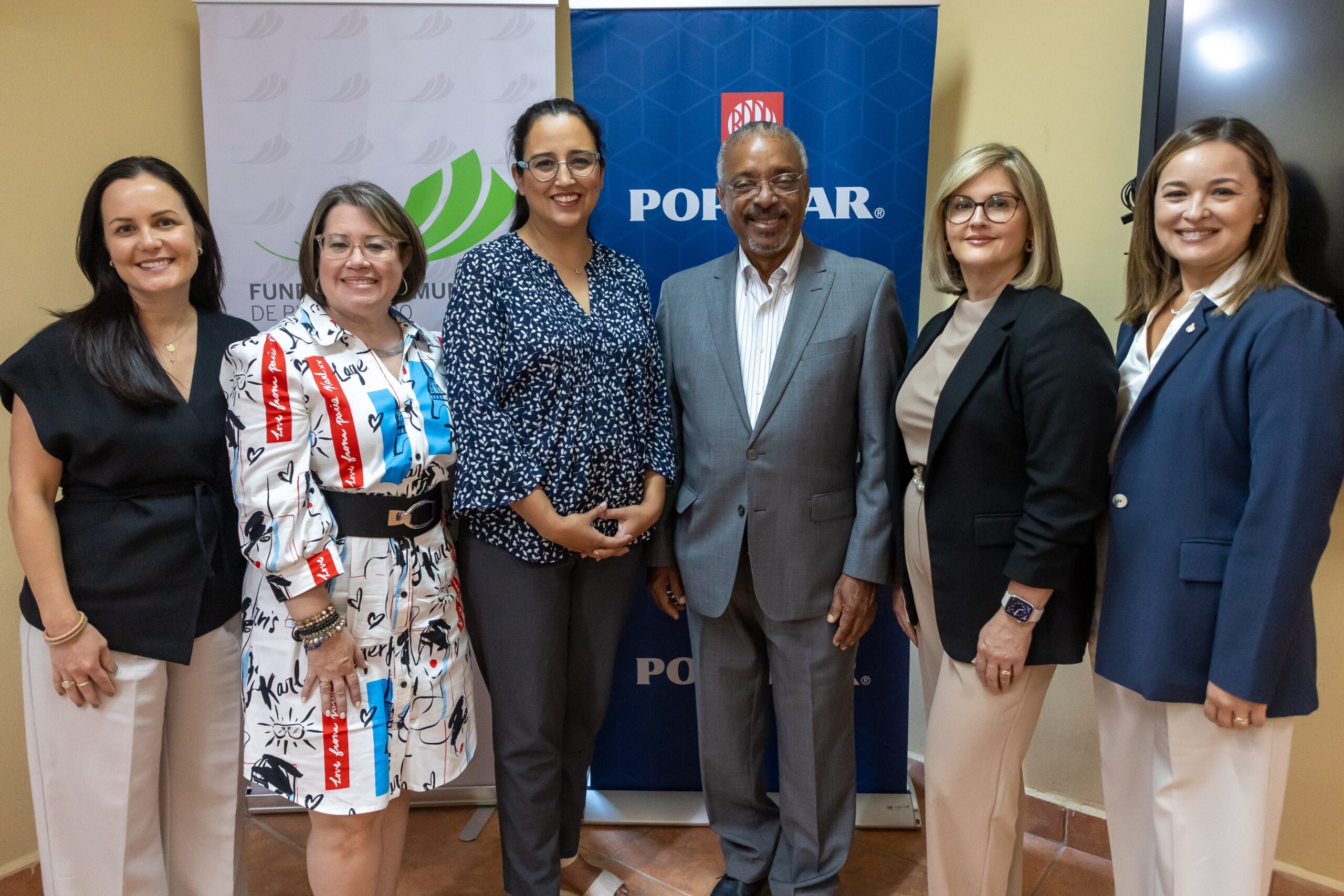
PHOTO - From left, Beatriz Polhamus, first vice president of BPPR's Social Engagement Division; Mary Ann Gabino, FCPR senior vice president; Isabelle Beltrán, GEAPP's managing director for Latin America and the Caribbean; Dr. Nelson I. Colón Tarrats, FCPR president and chief executive officer; Cynthia López, vice president and manager of BPPR's Government Guaranteed Loans unit; and Corina Camacho, first vice president and manager of BPPR's Commercial Credit division.