

Faced with the persistence of poverty, including extreme poverty, and the widespread impacts of climate change, the global community undertook the task of reviewing prevailing economic development paradigms.
Traditional development indicators like gross national product or consumption indices did not shed light on progress in combating inequalities. There was growing recognition that, to achieve peace, an economic development model was needed that could respond to the challenges of climate change and the persistence of inequalities.
After multiple processes of experimentation and evaluation of development models, on October 25, 2015, the General Assembly of the United Nations (UN) adopted Resolution 70/1, Transforming our world: the 2030 Agenda for Sustainable Development. This is an ambitious plan, which reaffirms the commitment to eradicating poverty in all its forms and dimensions, and affirms the promise that no one will be left behind.
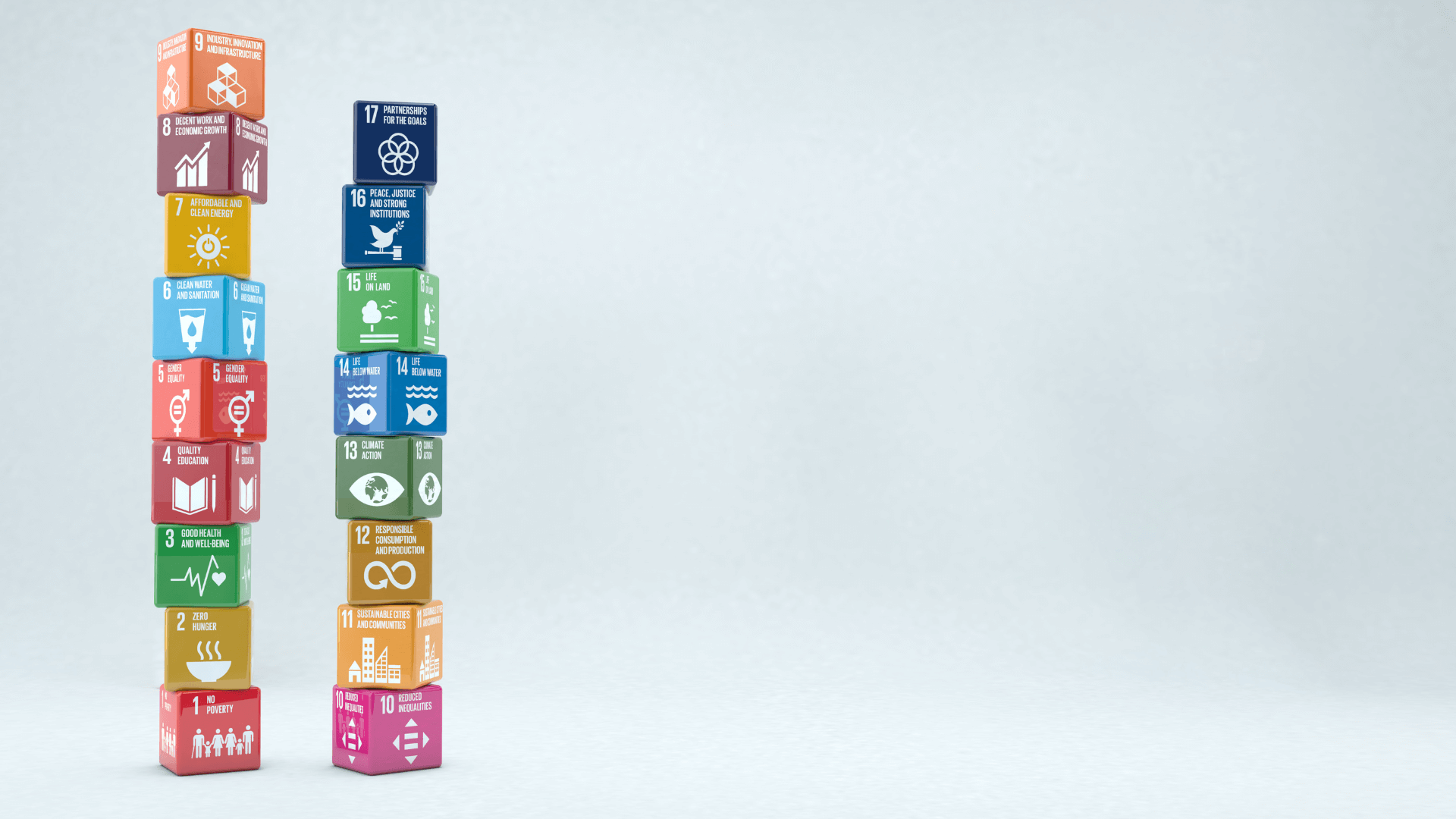
The 2030 Agenda for the SDGs adopted by the 193 member countries along with civil society and private sector stakeholders is a complex proposal for 17 objectives and 169 empirical targets that integrate the objectives of economic development, environmental protection, and equity for inclusion. The 2030 Agenda integrates several core concepts:
- Place equality and human dignity at the center of development.
- Affirm the integrated and indivisible nature of the goals
- Combine the critical dimensions for humanity: people, planet, prosperity, peace, and partnerships.
Another characteristic of this sustainable and inclusive development model is that it is oriented towards the evaluation of its results. The proposal includes empirical indicators of compliance that allow for monitoring the progress of the agenda and conducting comparative studies between countries and regions on the agenda's advancements. This aspect poses a significant challenge for statistical systems, given that evaluating the agenda's progress will require valid, reliable, and longitudinal data.
Despite numerous challenges, particularly the pandemic, the international community continues to make progress. More than 300 Voluntary Reports have already been submitted by governments to the UN. There is also a growing number of voluntary reports from state and local governments, regional entities, and specialized organizations that view the 2030 Agenda as an alternative paradigm to the neoliberal policies of recent decades. The Fundación Comunitaria de Puerto Rico aims to develop a Puerto Rico Volunteer Report, which serves to drive sustainable and inclusive economic development in our archipelago and which recognizes the contribution of community capital to achieve this goal.
Palmira N. Ríos González, PhD