

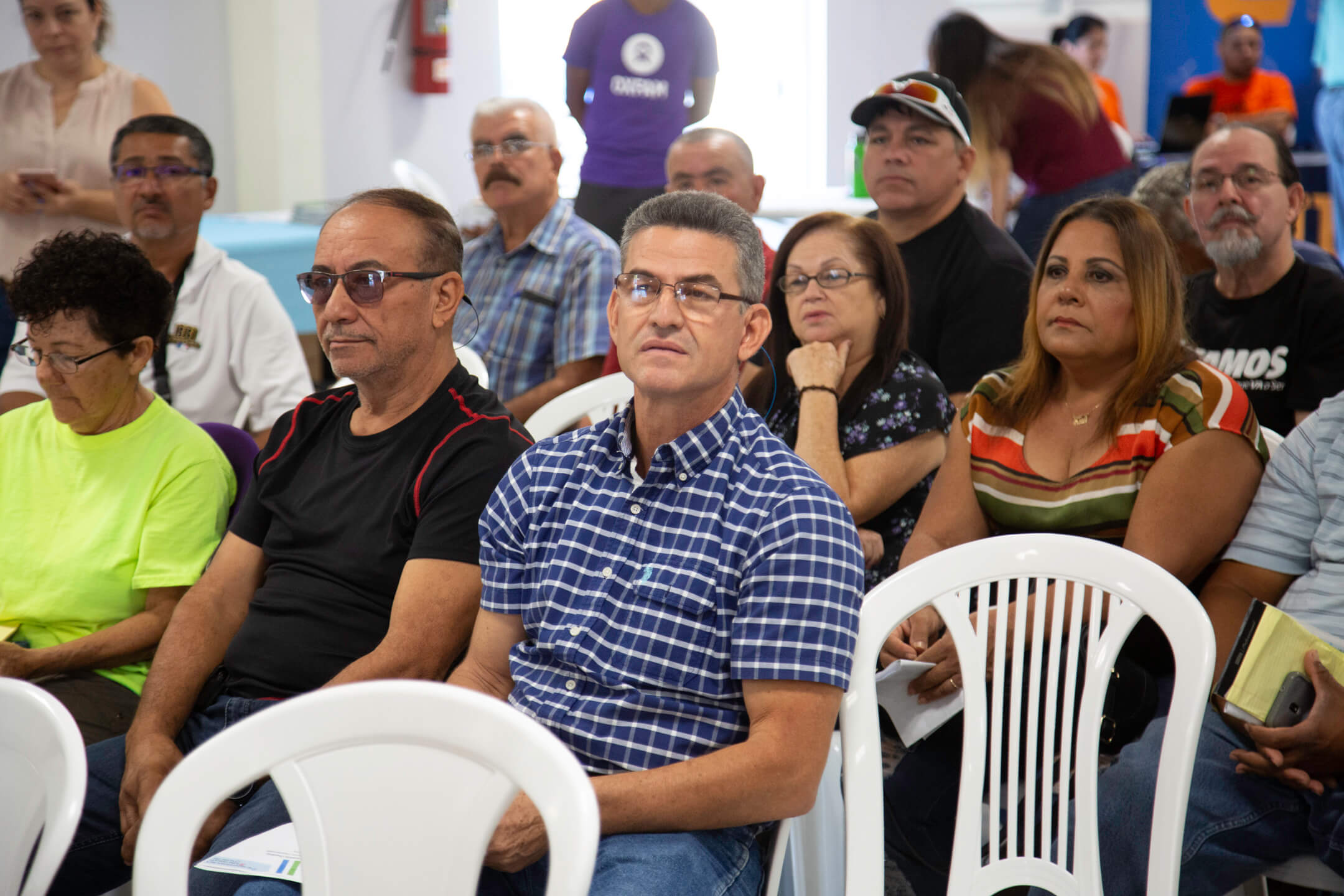
The recommendations are based on the experience of the Puerto Rico Community Foundation and its relationship with community of Puerto Rico and its relationship with community rescuers.
San Juan, June 4, 2019 | With the recent arrival of the hurricane season hurricane season, the Fundación Comunitaria de Puerto Rico (FCPR) shared a recommendations with nonprofit organizations to support them in preparing a natural emergency response plan. in the preparation of a natural emergency response plan. The nonprofits are the first community responders to respond to emergencies in their area of emergencies in their area of scope, so it is imperative that they design this type of plan. to design such a plan.
The recommendations stem from the Foundation's experience experience with Hurricanes Irma and María in September 2017, when hundreds of nonprofits came to the Foundation's hundreds of nonprofit organizations came to its headquarters in Santurce, where they shared their experiences as they sought support for the relief phase in their communities. relief in their communities. “In the aftermath of the hurricanes, nonprofit organizations evidenced the commitment and love they have for the communities they serve when they to the communities they serve when they decided to reconfigure their services to become shelters and provide to become shelters and provide responses to the pressing needs that both hurricanes the pressing needs that both weather events caused in such fundamental areas as access to food, shelter, food, water and sanitation access to food, shelter, water, and energy. For this reason, Fundación Comunitaria wants to contribute with information that will allow them to design an efficient response plan,” he said. an efficient response plan," said Nelson I. Colón Tarrats, Ph, president of the FCPR.
There are 11,570 nonprofit organizations on the island, according to the Puerto Rico Nonprofit Study (2015). According to the Study of NPOs in Puerto Rico (2015), there are 11,570 nonprofit organizations on the island.
The following are recommendations to be followed in the preparation of a natural emergency response plan. preparation of a response plan to a natural emergency.
- Organizes a community resilience community resilience committee and assign tasks and responsibilities; these people could be in charge of first aid, food people could be in charge of first aid, food, gas supplies, among other functions. gas supplies, among other functions. Make sure they can carry out their tasks, but at the same time, they can take care of their personal needs. So you should have reinforcement and task rotations.
- Take an inventory of infants, the sick, and the elderly; these are the most vulnerable populations and should be vulnerable populations and should be on a priority list.
- Make sure that your community has one or two telephone lines and telephones that do not require power so that residents can communicate with family members; establish phone hours and time per person. Establish times for telephone use and time per person.
- Identifies a resource to handle calls or approaches for help, so that they can be channeled effectively. channeled effectively. Generally, after a natural event, the following types of calls or approaches are received The following types of calls or approaches are usually received: money donors, supply donors, volunteers, and requests from people in need. needs.
- Establish establish alliances, prior to the event, with other organizations or centers with whom you can identify the best way to become active.
- Identify a location for supply storage site, and develops logistics for its distribution, starting with priority populations. distribution, starting with priority populations.
- Update your web page upon the announcement of a weather event with relevant information, including how to contact the organization.
- Use social media wisely wisely, targeting those who want to hear from the community or those who want to help. those who want to help.
- Identify the nearest radio station and a correspondent who can update information on the community's progress. community progress.
- Make sure debris removal debris removal tools are in good condition.
- Make a list of contacts and emergency numbers for churches, shelters, shelters, shelters, shelters, shelters, shelters, collection centers and health centers 330 near your geographic area and share with the share with the community.
- Orientates the community on the prevention of diseases transmitted by insects or other animals. other animals. This can be coordinated with a nearby health center, the Health Department or a private medical office. Department of Health or with a private medical office.
- Identifies people in the people in the community who are trained in first aid, conflict management, and first aid, conflict management and KP4 communicators. Involve them your plan.
- Update your organization's internal resources (employees) of your organization for the corresponding calls in case of emergency. corresponding calls in case of emergency.