

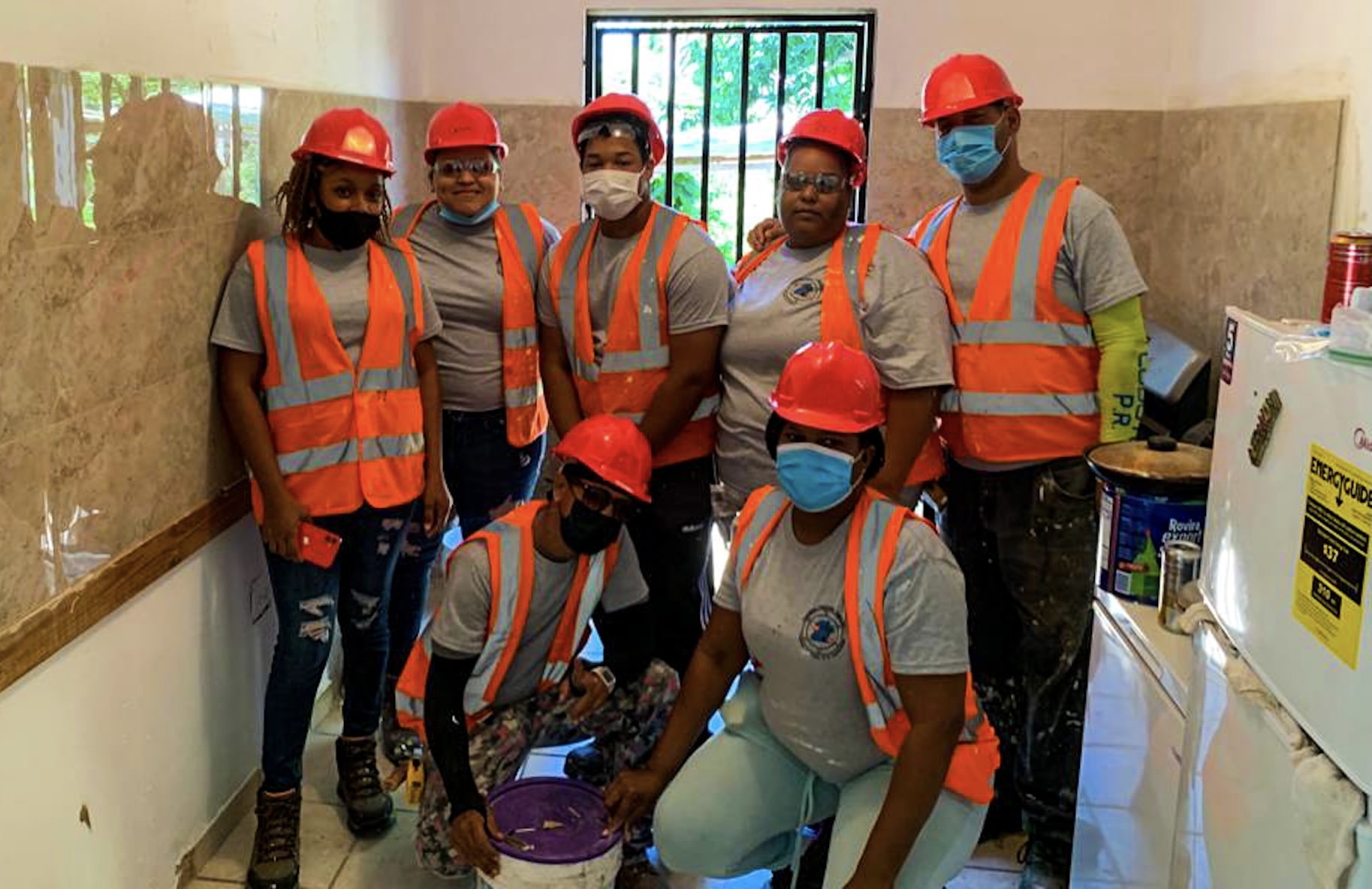
They participate in the Loíza Youth in Construction project. This is an initiative of Fundación Comunitaria de Puerto Rico (FCPR) and PathStone Corporation Puerto Rico, focused on providing its participants with a high school diploma, construction certification, stipend, participation in the reconstruction of Loíza homes and job placement.
By Libni Sanjurjo / Communications Officer, FCPR
A pleasant surprise...
That was the emotion that Brenda Soto, Quality Assurance Director at PathStone Corporation Puerto Rico, experienced while reading women's names on the applications for admission to the project. Youth in the Construction of Loíza.
“I was very surprised. I said, ‘Wow, this is great!’ It's rare to find women interested in non-traditional areas for women,” says Brenda. “It shows that women are capable of doing non-traditional tasks,” she adds.
The Loíza Youth in Construction project welcomed 11 men and six women. The initiative not only provides the opportunity to obtain a construction certification, but also a high school diploma for those who do not have one, practice in six residences in Loíza communities and receive a stipend. In addition, it facilitates the insertion of the 17 participants in the labor market once they complete their training, since there is currently a high demand for labor in this sector on the island. The project has been made possible thanks to a philanthropic investment by the Puerto Rico Community Foundation (PRCF)), awarded to PathStone Corporation Puerto Rico.
Three of the six participants agree that they are hard workers and open to new employment alternatives. “They are very hard-working,” says Brenda about their performance in the reconstruction work.
NACHA RAMOS: “Since I didn't have a fourth year, they didn't give me a job...”.”
One of the young women who said yes to the project was Nacha M. Ramos Cruz. Her main motivation: to obtain her high school diploma.
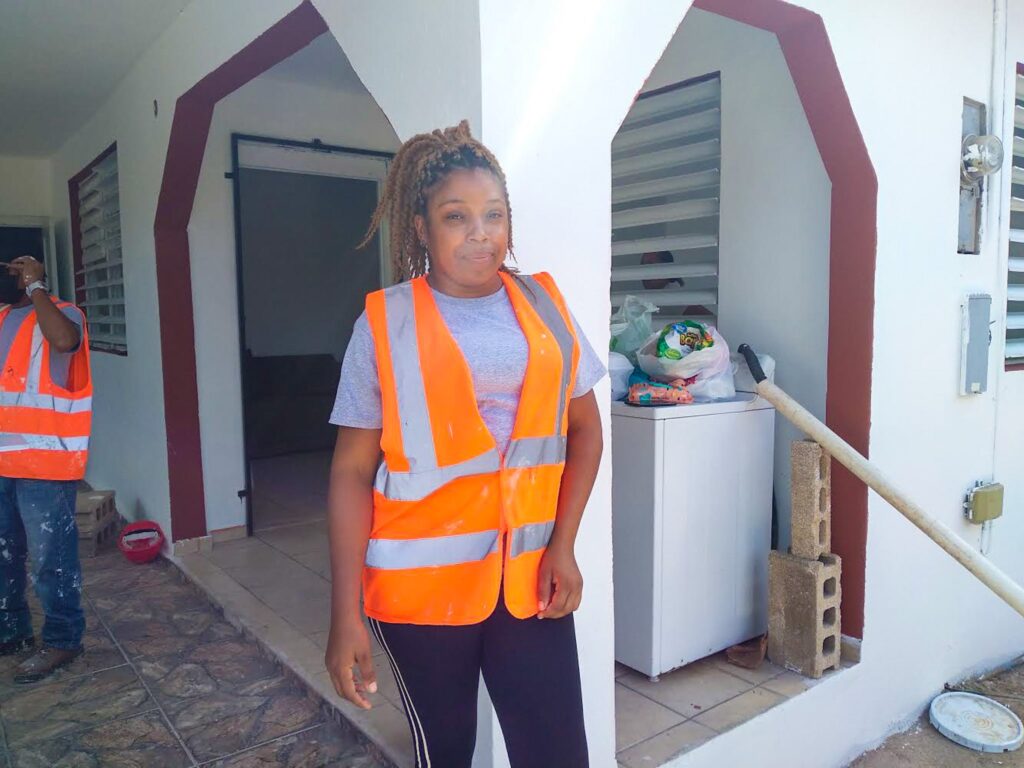
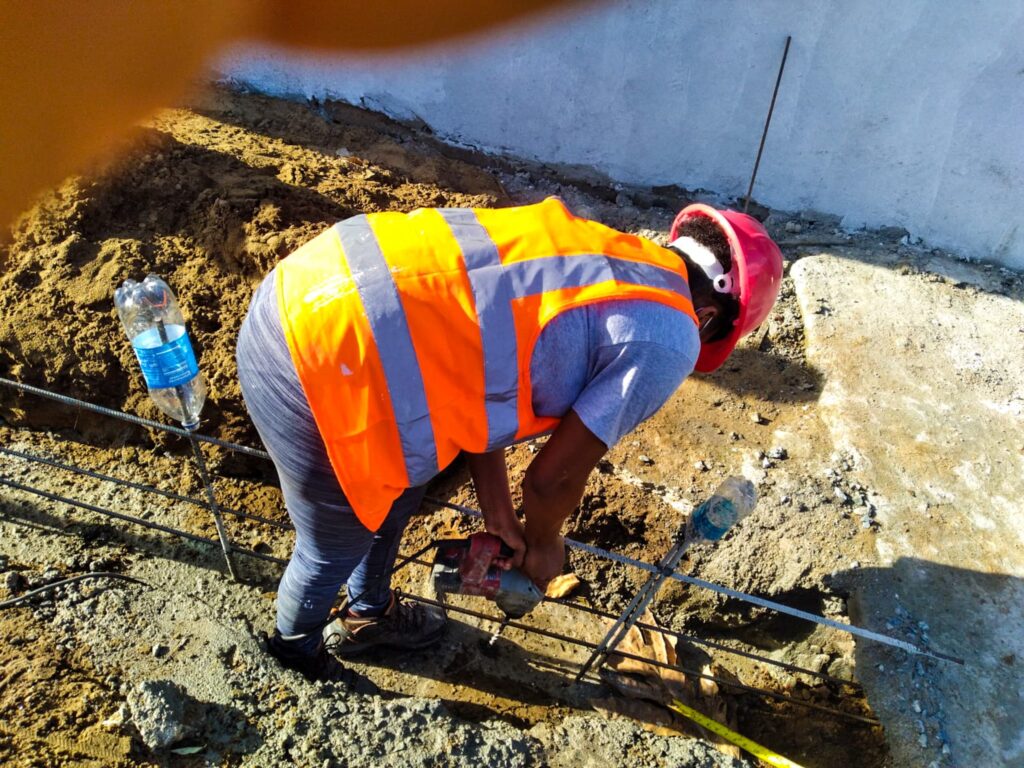
The 26-year-old had not been able to finish her fourth year because she became pregnant. She tried to finish it, but could not during the first years of her two sons“ lives. That made it difficult for her to find employment, as most employers require it. Still, she looked for ways to generate income through catalog sales or maintenance tasks. ‘Since I didn't have a fourth year, they wouldn't give me a job... And my neighbor would say to me, 'You have to throw out forward. Take the fourth year. And that way you do your own thing, your own work, and you don't have to wait for anyone. That's why the opportunity to apply to Loíza's Youth in Construction allowed him to achieve his academic and work goals without having to leave his hometown of Loíza.
The construction component of the project, however, made her hesitate. Nacha had never worked in anything related to the construction industry. “At first I was like, ‘Me in construction? How would I look like that? How am I going to do that? But now that I know, I like it, and it's even fun,” shares the resident of Tocones, Loíza.
So far, the biggest challenge has been the use of machines such as the chipping hammer and the saw.
“I never thought I would be able to do construction work, but I was able to do it. And I can do that and much more, whatever I set my mind to and whatever I focus on. Whatever I want to do, I know I can do it,” he says. That's why she's taking the courage to make a dream come true: to study baking. “I've never had a career...”, she stresses.
And if in the meantime an opportunity in construction comes up, he knows he can say yes, “I'll get my hands on it,” he says.
ZAIMARA AYALA: “This has shown me that will is power”.”
Similarly, Zaimara Ayala San Miguel entered the project to obtain her high school diploma. Several years ago, the 31-year-old had managed to complete classes that would allow her to complete her fourth year, as well as obtain a degree in practical nursing with phlebotomy.
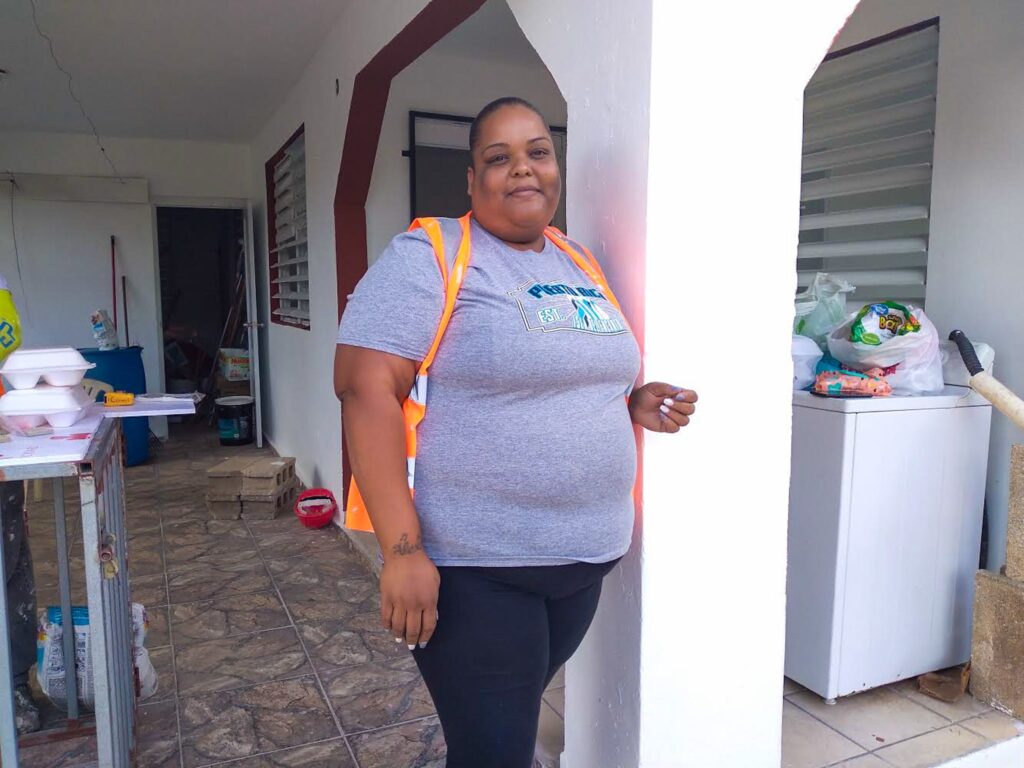
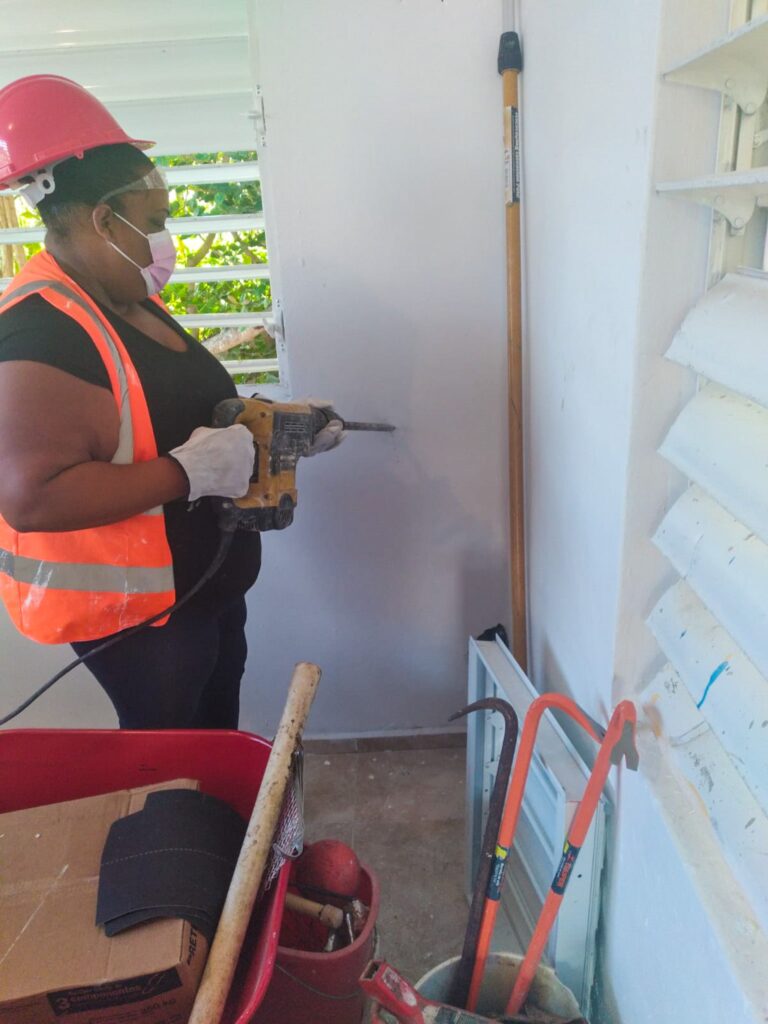
However, Zaimara was never able to access both diplomas because she had not paid in full by the time the educational institution where she studied closed its operations on the island. She was never able to obtain them, she says. Even so, she managed to work in different places, until she came across the alternative of the project in Loíza.
“I was encouraged because I said, ‘This is my chance, since those plans went down the drain. Now I can achieve what I want,’” she says. And although it's been “a little hard” for him to persist in his goal of achieving the fourth year, he's succeeding.
The opportunity to work in construction came to him, something he had never worked in before, although he had plastered - he recalls - part of the balcony of his house. The hardest part was pouring cement. “It was difficult, but I made it,” he says. In the house he is working on, he has painted, sanded, leveled walls and worked with putty. At the end, she feels satisfaction for the work done, because the houses in the project were “quite deteriorated... We are covering a need that had not been covered,” says the resident of Piñones, Loíza.
What would you say to young people who are in a similar position to the one you were in before the construction classes?
ZAIMARA To motivate themselves. To fight for their dreams. To give themselves the opportunity to experience another challenge. This has shown me that will is power, that before I didn't have the opportunity that I have now.
GLENDA AYALA: “I like hard work”.”
Unlike Zaimara and Nacha, Glenda L. Ayala Cirino, 45, already had her high school diploma. But at the time she learned about the project, she was unemployed. The opportunity came at a good time because she was coping with the loss of her 21-year-old son.
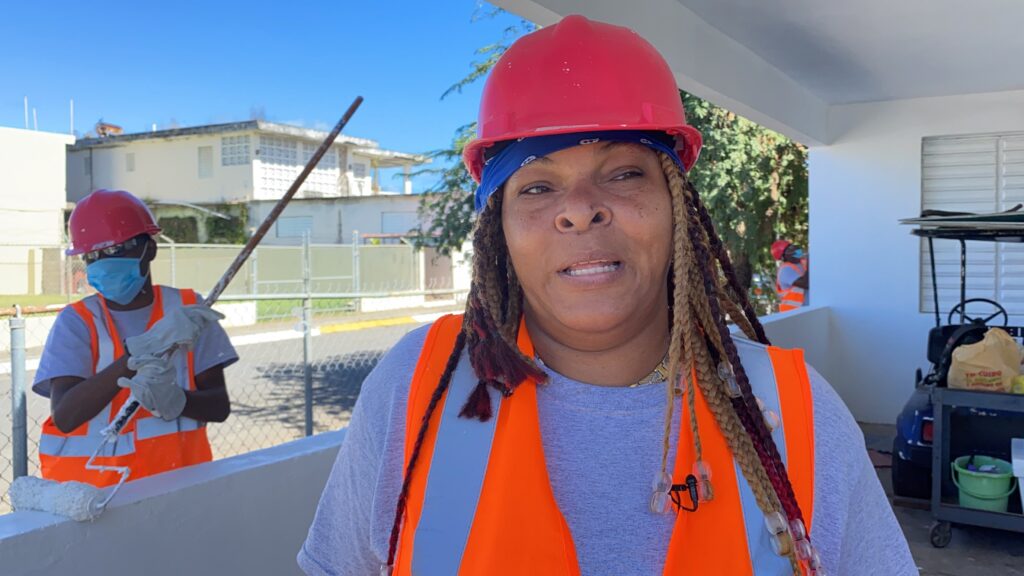
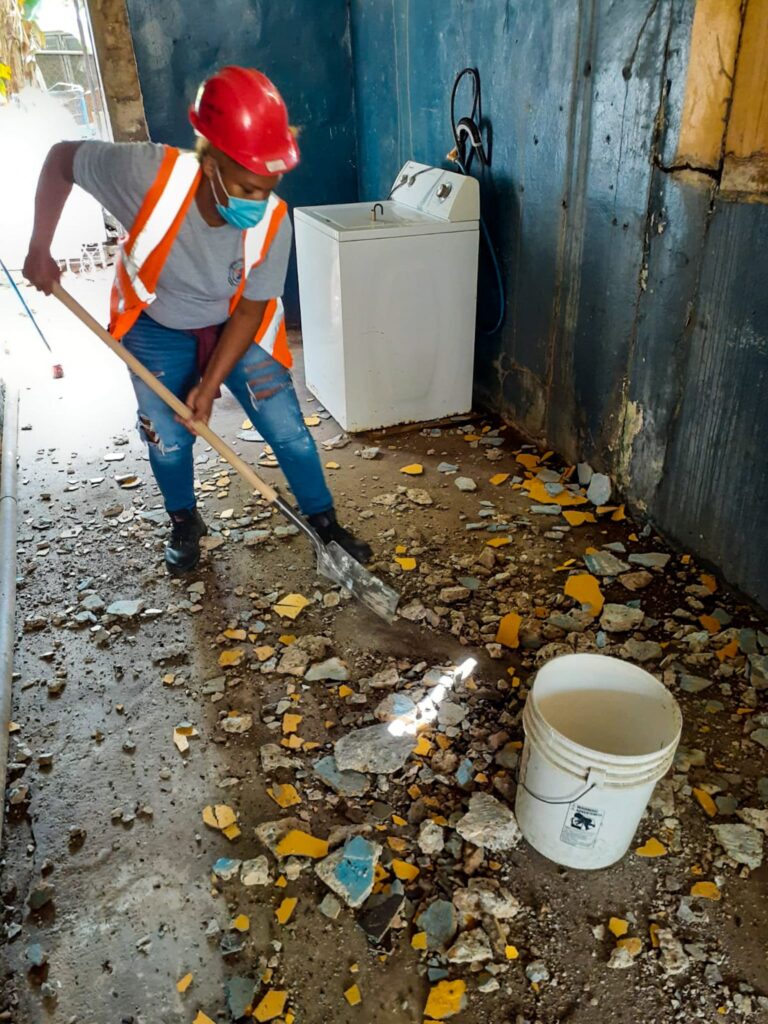
The alternative was attractive: not only would she learn a new skill, which would open doors to new opportunities, but it would also clear her mind... Until then, the woman had not worked in the construction industry. But now, she loves it. “Every time she came to the project, I arrive happy. ‘Here comes the engineer!’ she says with a laugh. ”I sleep with the hard hat and wake up with the hard hat,“ she adds.
The resident of Tocones, in Loíza, used to work in maintenance tasks.
“I like hard work. I take the chipping hammer... I don't sit still. I move. I take the shovel, and if I have to go over the stones, I pick them up, and we go. forward. If there is employment, we will forward. And I already do at home in na’”, says Glenda, who currently resides in a residential home.
Jóvenes en la Construcción de Loíza is part of a broad racial and social justice strategy that FCPR has been developing since 2015 to contribute to the integral wellbeing of children, youth and families in this town. For this project, FCPR received contributions from the W.K. Kellogg Foundation. In particular, the project strengthens the financial, human and physical capital of the participants, thus strengthening the community capital of Loíza. The initiative has the collaboration of Taller Salud, Ferretería Pagán, Municipality of Loíza and Vitrina Solidaria.
This is the third in a series of articles on the project. Youth in the Construction of Loíza.