

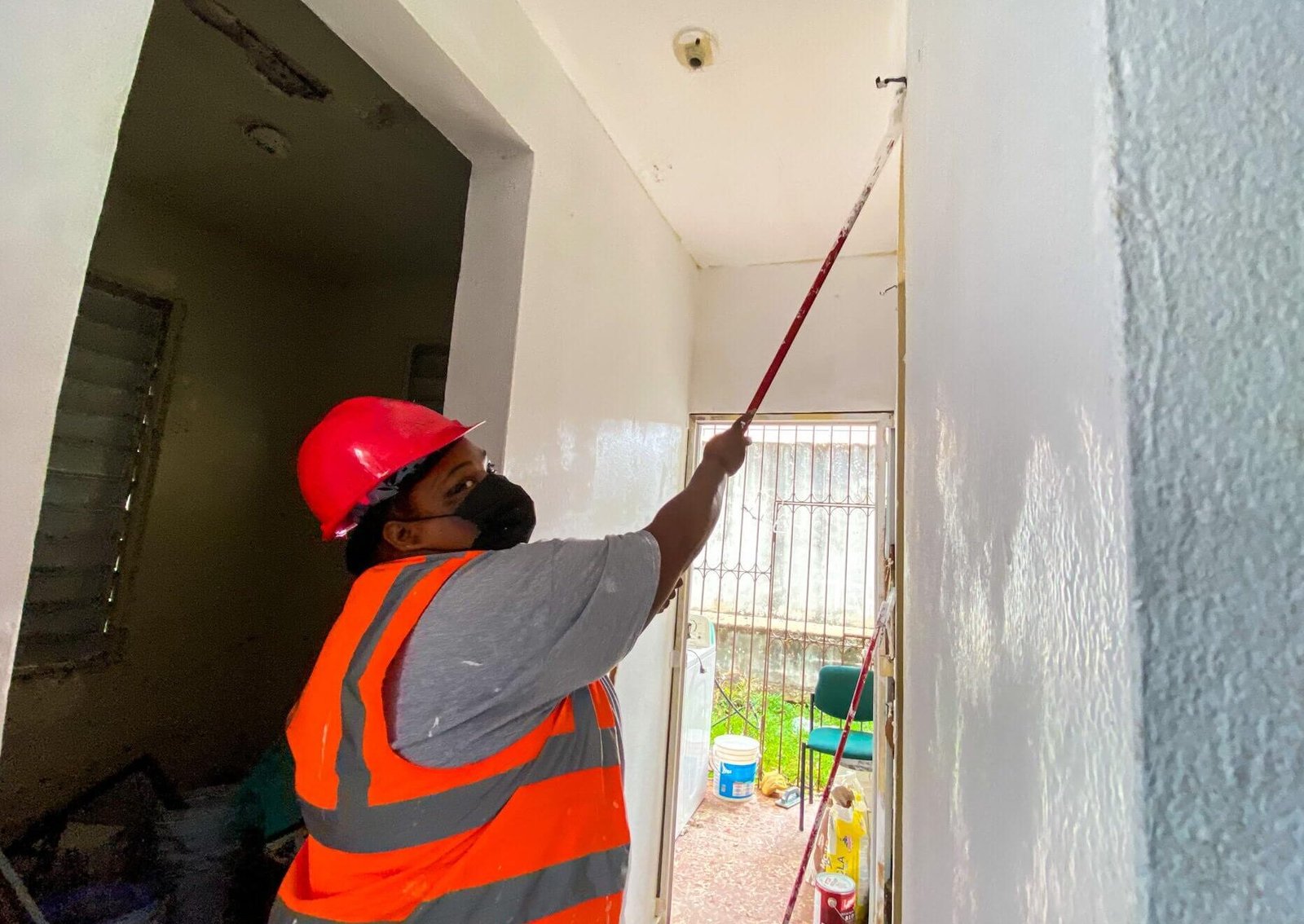
Participate in the Youth in Construction Loíza project. This initiative by the Puerto Rico Community Foundation (FCPR) and PathStone Corporation Puerto Rico focuses on providing opportunities to complete the fourth year of High School, earn a construction certification, receive a stipend, actively participate in the reconstruction of homes in Loíza, and secure employment.
By Ruth E. Hernández Ríos / Communications Consultant, PathStone Corporation Puerto Rico
“To find a good job, improve myself, get ahead, stay afloat... I'd like to be an architect.”
She has dreams, but today at 31 years old, she is aware of how much work is involved to make them a reality. She has faced challenges. However, she assures that she is determined. She wants to transform her life and has already started making decisions in that direction. For her, it's never too late.
“I would like to start a construction company that is all women. And you know why I would like to start a construction company that is all women? Because most people who need construction work done are often women. And when they look for someone and it's a man, it's a little uncomfortable. Whereas when it's a woman, the situation is different, it changes because they feel more at ease,” she states firmly. Zaimara San Miguel, participant in the Youth in Construction Loíza project.
The project welcomed 11 men and six women. The initiative not only provides the opportunity to obtain a construction certification, but also a high school diploma for those who do not have it, hands-on experience in six residences in the Loiza communities, and a stipend. Furthermore, it facilitates the insertion of the 17 participants into the job market once they complete the training. The project has been made possible thanks to a philanthropic investment from Puerto Rico Community Foundation (PRCF)), awarded to PathStone Corporation Puerto Rico.
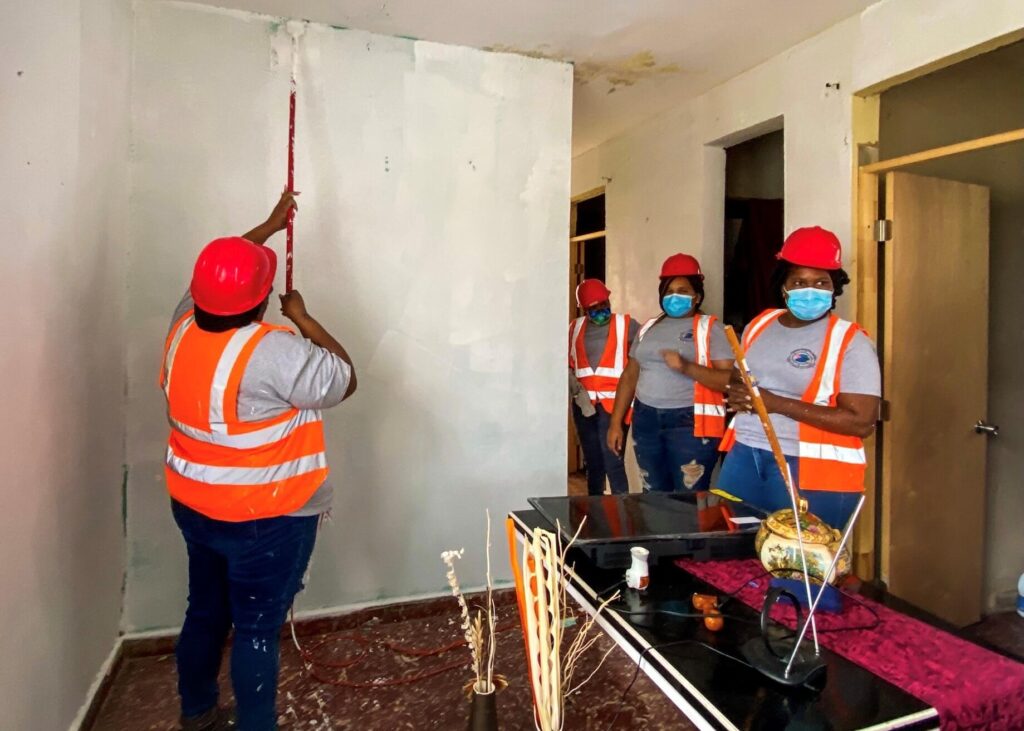
Zaimara cares for her mother, who suffers from multiple health conditions (hypertension, diabetes, neuropathy, asthma, among others), and her 12-year-old brother. He has autism. Nonetheless, this young woman from Loíza values the opportunity the project provides. “My normal day was waking up at 6:00 AM, going to my mom's house, preparing her breakfast, helping her bathe. Then, giving her breakfast and helping my little brother with his classes, which he was taking online. Giving him his medication. She takes a lot of medication. (I would administer) her insulin. By around 10:30 AM, I had to prepare her lunch… her snack and her other things. By around 4:00 PM, I would prepare her dinner. Then I would return to my house to do my household chores, cook for my husband,” Zaimara recounts as she reviews her routine before being accepted into the training and community impact project.
The young woman says she decided to participate in the project because she wanted to complete her fourth year. Zaimara was not short of goals. She even studied nursing. However, some time ago, fate played a trick on her.
“After I finished studying, graduated, and all that, it turns out that when I went to make a final payment, I found out that they (the educational institution where I studied) went bankrupt. And I couldn't even get my fourth year or my nursing diploma,” Zaimara recounts with the memory still fresh in her mind. “I told myself: ‘Well, I fought so hard for my fourth year, and it all vanished... so this is my chance to get my fourth year and finish the career I had already started’,” she told herself at that moment to convince herself that participating in the project was her best choice.
Today, months later, Zaimara assures that she feels “blessed,” “happy,” and “content because I wasn't expecting any of this,” referring to the experience. “I have learned a lot. I have achieved things in terms of construction that I had never achieved before. I've done well,” adds the young woman, who also values and feels grateful for the opportunity to help her fellow villagers rebuild their homes. “What has given me the most satisfaction has been being able to help those people because they were in need. The houses were deteriorated,” Zaimara adds.
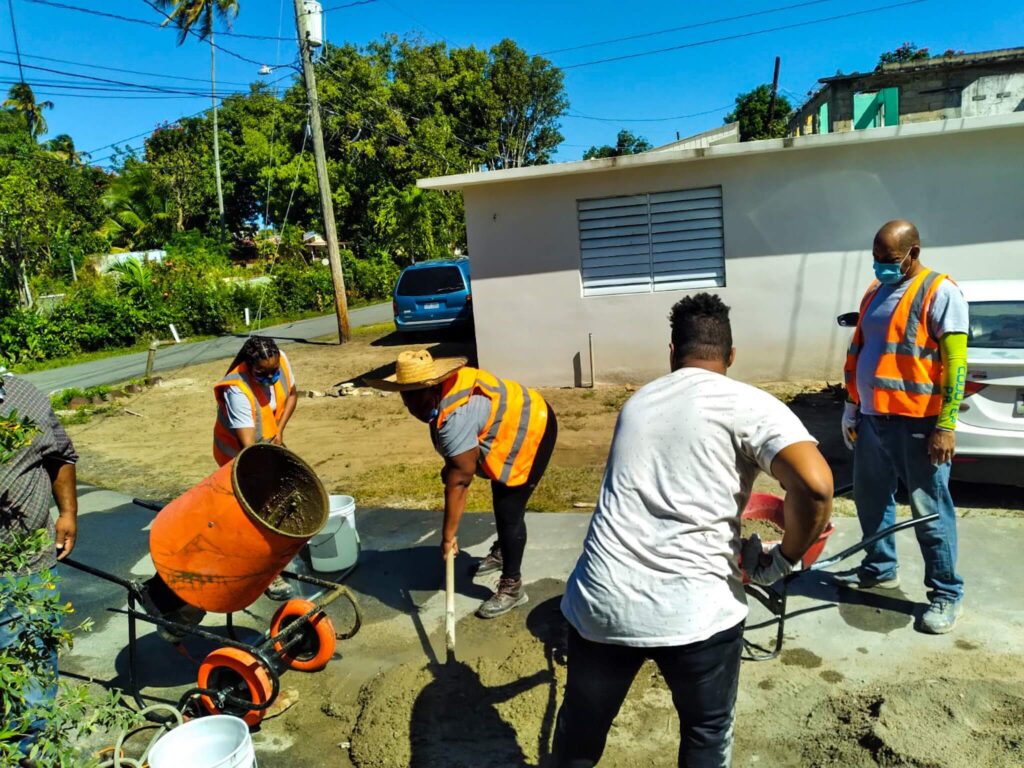
The most challenging part of the program has been “mixing cement. It's not the same to see it and say: ‘Ah, this looks easy.’ As it is to do it yourself and see that it's hard work,” she confesses seriously. Another challenging aspect, but one that Zaimara has taken as a life lesson, is her new routine and having to adapt to a starting time. “Well, this has taught me a lot. For me, it's been a challenge to have to wake up at 4:00 in the morning to be on time for work. And it's taught me to get up early, as they say,” the young woman values.
“WE ALL WORK... WE ARE DOING MEN'S WORK”
Zaimara highlights the work of the six women who are part of the Youth in Construction program in Loíza. “We all work. They have used Shippy hammer. They have broken down walls. That phrase about the weaker sex doesn't apply to me because we are doing men's work. Few women dare to use a Shippy hammer, to use a grinder to cut rebar, which I love because I learned it there and I like it,” she emphasizes, excited and convinced of the good work her colleagues are doing. “I would recruit them. I'd say all of them,” Zaimara states to highlight the good work the female sextet has done in her opinion.
And he speaks in similar terms about the rest of the team, including the employees of the project management organizations, the participating peers, and the teachers. “I can say about my team that it's an excellent team. There's camaraderie. We help each other. I feel good,” he assures. He particularly highlights the treatment he has received from employees of PathStone Corporation Puerto Rico and Fundación Comunitaria, the organizations that manage the project in Loíza. “They have treated me very well, very well,” he adds.
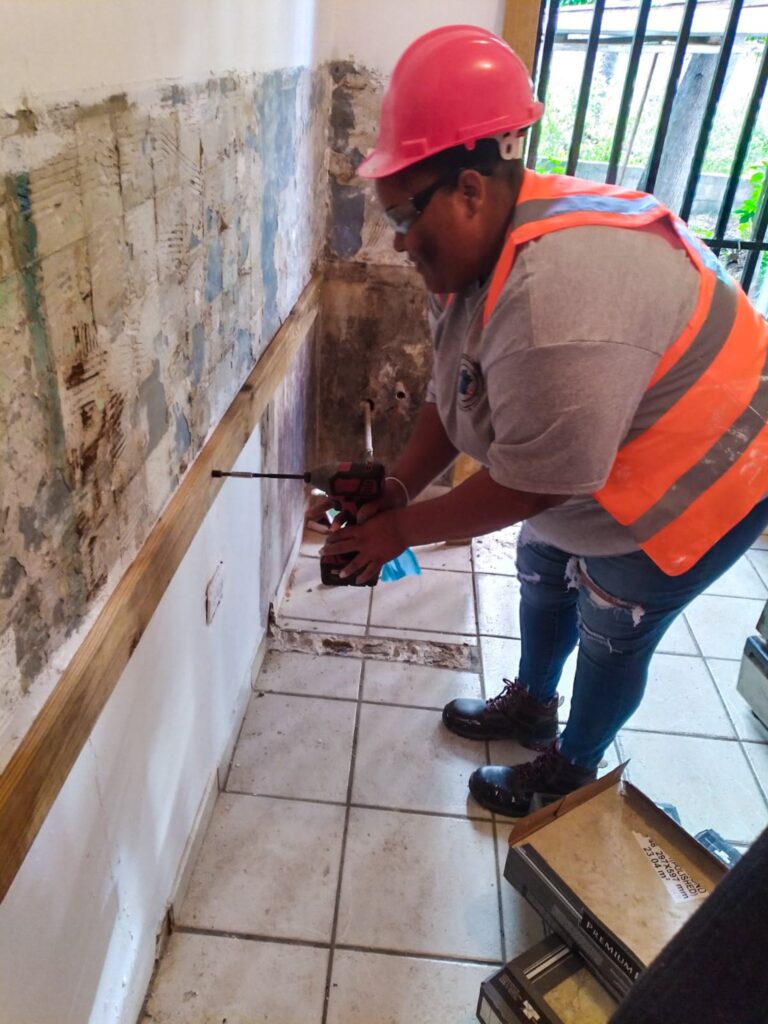
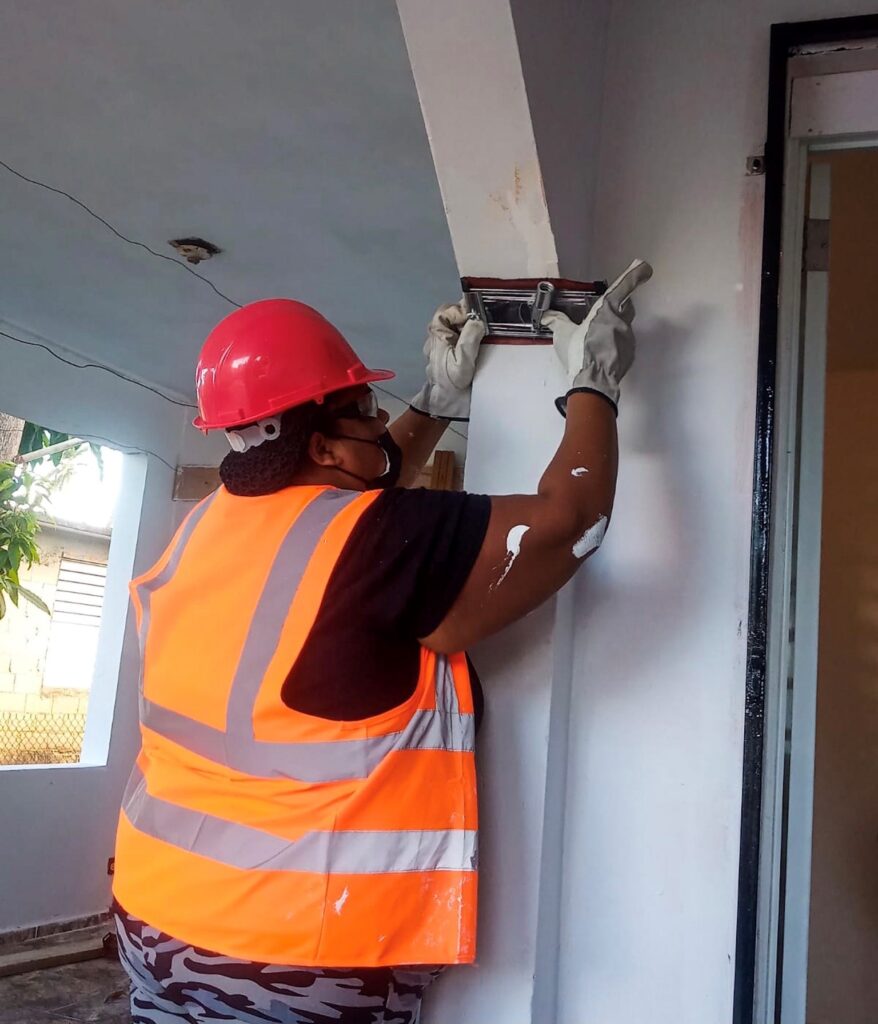
But the sense of teamwork and unity also brings happiness to Zaimara. In fact, she recall with laughter a funny moment that highlights the sense of teamwork and family that the participants have. “One time I arrived a little late and when I got there all my colleagues were in the house where we were working, and they started saying: ‘Wow, Zaimara's here’ and applauding. And that for me was something funny because it was something I didn't expect. That reflects the support we give each other on the program,” she recalls, moved.
Zaimara wants other young people like her, who are currently feeling frustrated because they are going through a difficult time, to experience this emotion. She takes the opportunity to give them some advice. “I would tell them to try. Everything in life is difficult... They have to try and fight for what they want,” urges the young woman, who assures that her inspiration is “my family, my mom... to give my mom a better quality of life. My mom means everything, everything, everything, everything to me,” she says, her voice breaking with emotion.
“There's only one mother...”
Zaimara is clear about her purpose and what drives her. Her mother is her inspiration.
She would love to repay him for everything he has done for her, and the mere thought that one day she might no longer be able to enjoy his presence terrifies her. “It was very difficult for me when my mom had a heart attack. It happened after Hurricane Maria. I had a hard time because she's my mom. And I said, ‘Wow, it would be very difficult for me if, at some point, I no longer had her, if I missed her.‘ And I also suffered a lot because my little brother is too attached to her. And so, during the time she was in the hospital, here and there, he suffered a lot. And he would tell me every day: ’Zai, when is Mom coming back? Take me to see Mom.” I even had to take him to the hospital one day and ask her guard and doctor for permission because he really missed seeing my mom," Zaimara recounts sadly.
Although she has cared for her mother “all the time, for many years, for as long as I can remember,” Zaimara longs to be able to offer her mother a better quality of life. Her mother has always taken care of her and other family members. “When I was eight years old, my mom and I went to the United States. There was a family situation with one of my mom's sisters, and she took my aunt's seven children and me with her,” Zaimara recalls from those times.
Zaimara takes the opportunity to share a message with those young people who are having problems with their parents, especially their mothers.
“I can tell you that ‘mom’ is ”mom,' and there's only one mother... Whatever happens with your mother. Your mother might be the worst. But often, we're angry with our parents, and when our parents are gone, that's when the 'ohs' and laments come. And the questions, because you question yourself, thinking, but why... Was it my fault?" she reflects.
Even when Zaimara introspects and evaluates her virtues and flaws, she inevitably turns to her relationship with her mother. She states that her greatest virtue “is what I'm doing for my mom.” My biggest flaw, I would say I'm too nice. I like to help everyone, sometimes without even knowing them... And sometimes you have to be a little tough... put it on a scale. You have to be half and half,” advises the young woman in her thirties.
However, what does Zaimara value most in a person? “I value them being an upright person, sincere, loyal, and above all, respectful. I detest being lied to and, as they say, ‘stabbed in the back’,” she concludes.
Jóvenes en la Construcción de Loíza is part of a broad racial and social justice strategy that FCPR has been developing since 2015 to contribute to the holistic well-being of children, youth, and families in this town. For this project, FCPR received contributions from the W.K. Kellogg Foundation. In particular, the project reinforces the financial, human, and physical capital of the participants, thereby strengthening the communities of Loíza. The initiative has the collaboration of Taller Salud, Ferretería Pagán, Municipality of Loíza, and Vitrina Solidaria.
This is the fourth in a series of articles about the project Youth in the Construction of Loíza.