

Version PDF from the press release
San Juan | Monday, April 19, 2021 | The Fundación Comunitaria de Puerto Rico (FCPR) announced today that it has begun the first phase of the energy redundancy project for the island's community aqueducts. This phase will include the installation of solar systems and emergency generators to ensure their uninterrupted operation and, consequently, the supply of potable water to thousands of families. Work began with the community assessment process, following the signing of a grant funding agreement in December with the Central Office for Recovery, Reconstruction, and Resilience (COR3), under the Risk Mitigation Program of Federal Emergency Management Agency (FEMA).
The first phase, scheduled to be completed in February 2022, is underway following the approval of a $1.7 million grant out of a total of $25 million. During this first phase, data is being collected on the communities and their drinking water systems, as well as on prevailing environmental conditions and their potential impact and permitting requirements. A feasibility analysis is also being conducted to determine equipment types, the preliminary design of the redundancy system, and its location. In addition, community engagement and training processes are being developed, along with work plans for each community. Initial contact has already been established with 160 communities, and visits have been made to 50 community water systems—the systems were grouped into four regions: southwest, south-central, central, and southeast.
In Puerto Rico, there are approximately 242 community water systems, located in 43 municipalities and in remote, mountainous rural areas; they supply drinking water to 31% of the population—approximately 120,000 people. The infrastructure of the Puerto Rico Aqueduct and Sewer Authority (PRASA) does not provide service to these areas, so these systems are commonly referred to as NON-PRASA systems.
“After an arduous recruitment process that included the selection of regional managers and community coordinators, the FCPR began the first phase of this potable water access project in March, utilizing energy redundancy for vulnerable communities, with the determination to guarantee social justice, equity, and community prosperity. In this way, we are preventing future emergencies from jeopardizing the continuation of this vital service. We appreciate the trust that government agencies placed in our proposal, as well as the contributions of donors to the projects we have executed as part of our program. Water For Us”said the president and chief executive officer of FCPR, Dr. Nelson I. Colón Tarrats.
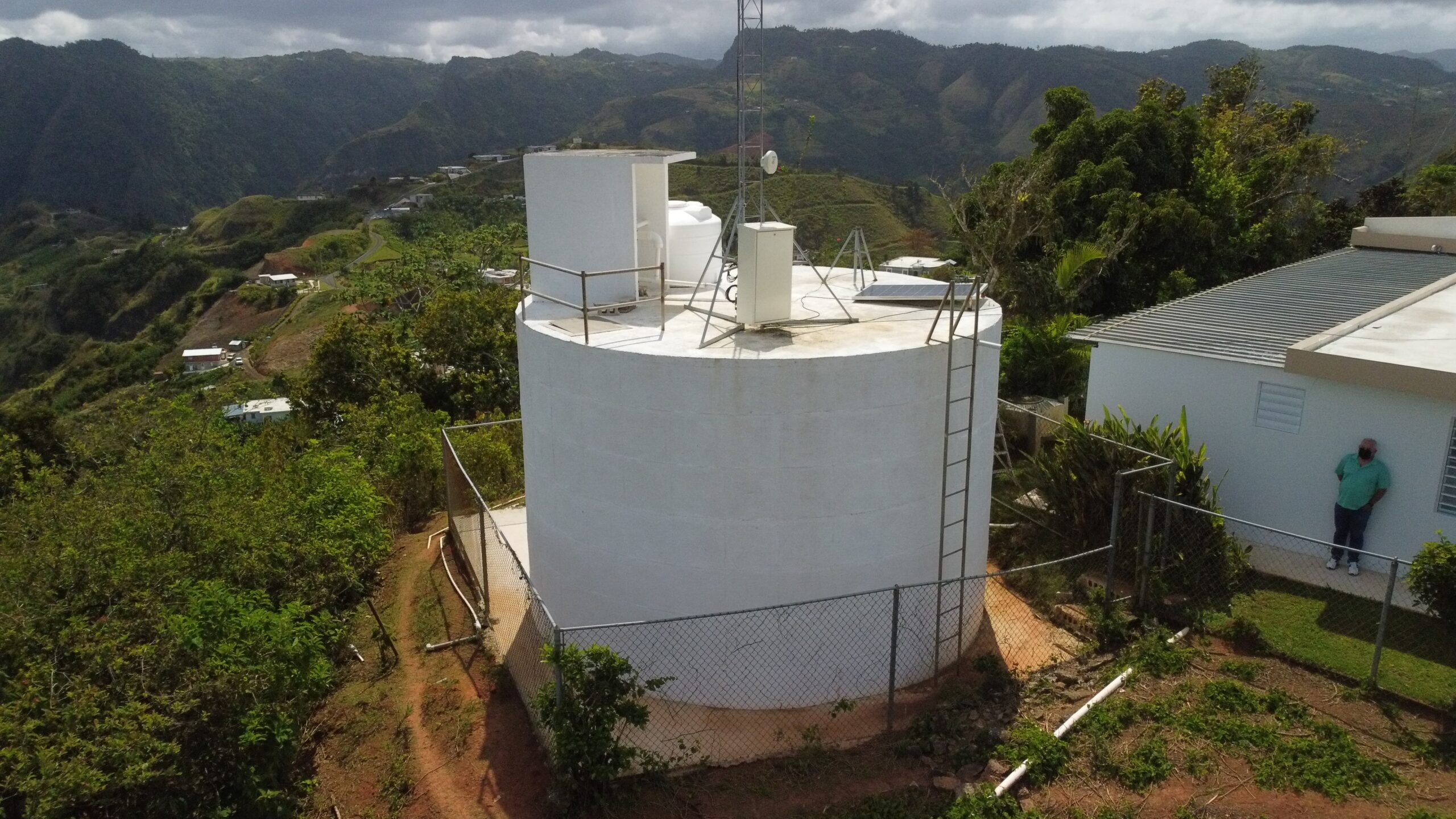
The second phase, scheduled to begin in March 2022, includes the installation of high-efficiency water pumping equipment capable of operating with solar energy, electricity from the Electric Power Authority, or generators; and the installation of photovoltaic equipment to generate solar energy and an emergency generator with an integrated fuel storage tank. In addition to the uninterrupted service, the completion of the project will reduce health risks and vulnerabilities associated with the lack of potable water, particularly during disasters and emergencies; strengthen community resilience and disaster preparedness; improve access to safe potable water; and empower communities by strengthening their capacities.
This project is one of those developed by the FCPR since the end of 2017 through the program Water For Us, focused on provide access to safe drinking water by strengthening these communities in four essential areas of their community aqueducts: infrastructure, community organization, administration, and compliance with regulatory agencies. Prior to the start of this project, Agua Pa’ Nosotros has had a relationship with 102 communities with community aqueducts, of which approximately 60 aqueducts have received technical assistance; 20 communities have been granted donations to improve their infrastructure; two emergency centers have been developed in communities with community aqueducts (Corcovada, in Añasco, and Las Corujas, in Aguas Buenas); and 13 community aqueducts received donations to support community actions in the face of the Covid-19 pandemic. Agua Pa’ Nosotros has had the following allies and donors: Hispanic Federation, Global Giving, Oxfam, Conrad N. Hilton Foundation, and Center for Disaster Philanthropy.
To learn more about the project, you can call 787-349-7652 or write to acueductoscomunitarios@fcpr.org. More information can also be found on the accompanying fact sheet (PDF).
PHOTO The image shows the Saltos Pellejas Corporation tank in Orocovis.